Where Exactly Is Frimley Green?
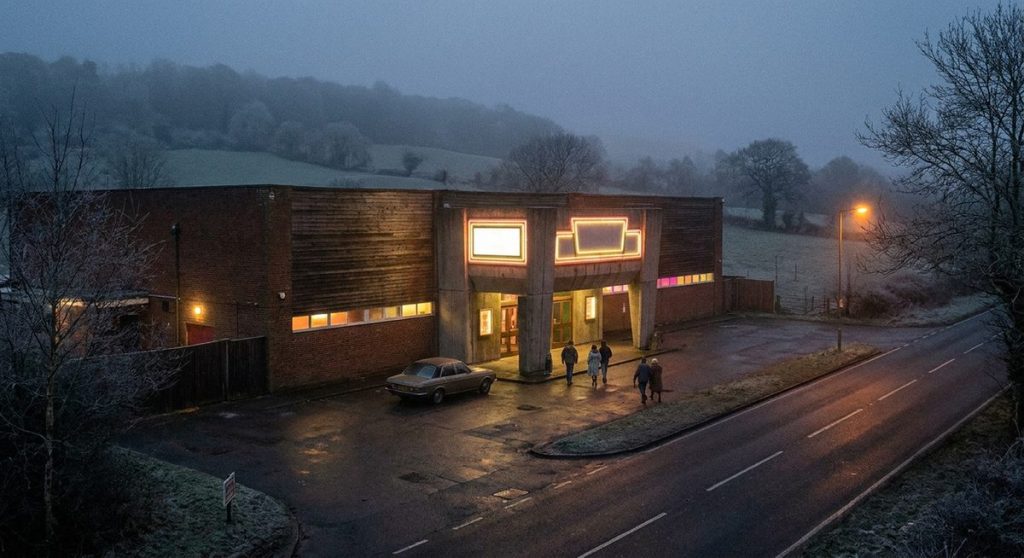
Look it up on a map and you’ll find it tucked between Camberley and Aldershot, just off the A321 in Surrey. Not the West End. Not a city-centre arena. A cabaret club in a suburban corner of the Home Counties, accessible by a retail-park access road and a car park that filled up long before the evening session started.
That was not an accident. Bob Potter didn’t build the Lakeside Country Club to be convenient. He built it to be special, and for thirty-four years of BDO World Championships, special is exactly what it was.
Frimley Green is the kind of place that doesn’t announce itself. There’s no big sign on the A30 saying you’re arriving somewhere significant. You turn off, follow the road past the pub and the industrial units, and then there it is: a low-rise complex on the edge of a reservoir, with a queue of darts fans in replica shirts stretching back further than you’d expect for a Tuesday night in January.
The village itself is unremarkable in the way that most Surrey commuter belt settlements are unremarkable. A few pubs, a green, roads that feed into larger roads. Nothing about the geography suggests a world-class venue. That gap between setting and significance was always part of the appeal. You turned up somewhere that looked like nowhere in particular and found yourself watching the finest darts players on earth competing in front of a thousand people who could barely contain themselves.
Regulars drove that road year after year from the late 1980s on. The approach never changed. Neither did the feeling when you parked up and joined the queue.
Bob Potter: The Man Who Made It
You cannot tell the story of Lakeside without telling the story of Bob Potter. The two are inseparable.
Potter started in music in the 1950s and early 1960s, booking bands into venues across the south of England and beyond. He had an ear for what would fill a room. In the early days of the British beat boom, he was booking The Beatles and The Rolling Stones into UK dates: not as an afterthought, but as a core part of his business. He knew talent before most people had heard of it.
In 1972 he bought Wharfenden House and the surrounding grounds in Frimley Green, opened the Lakeside Country Club, and spent the next fifty years making it something extraordinary. The entertainment business model he understood instinctively: give people a night out they couldn’t have at home, put the best acts on stage, keep the room full and the atmosphere right.
It worked. By the late 1970s, Lakeside was regularly cited as the finest nightclub in the country. Bob Potter was awarded the OBE in 1993. He died in April 2023, aged 94. Not many people build something that genuinely matters and then watch it matter for half a century. Bob Potter did.
There’s one other thing worth saying about him. He was a significant philanthropist: a consistent supporter of the NHS and local charities throughout his life, long before it was fashionable for businessmen to lead with their charitable work. The tributes when he died came from politicians, entertainers, darts players and nurses in equal measure. That tells you something about the man.
Peter Kay’s Phoenix Nightsthe sitcom about a northern working-men’s club run by a flamboyant owner who books endless cabaret acts. Was widely reported to have been inspired in part by Potter’s world. Whether Kay would confirm that or not, the parallel is obvious to anyone who spent time at Lakeside.
Before Darts: A History of Showbiz
The BDO World Championship came to Lakeside in 1986. By that point, the venue had already been hosting top-tier entertainment for over a decade.
The names are worth spelling out because they’ve been largely forgotten in the darts narrative. Tommy Cooper played Lakeside. Bob Monkhouse. Morecambe and Wise. Tom Jones. Diana Ross. Marvin Gaye. Shirley Bassey. Sammy Davis Jr. These weren’t minor gigs. These were the headline acts of British and international entertainment, and they played a club in Frimley Green because Bob Potter had built the kind of room that serious performers wanted to play.
Cabaret in that era was a serious industry. The circuit of working men’s clubs, ballrooms and supper clubs that stretched across Britain employed thousands of performers and drew millions of punters each week. Lakeside sat at the top of that world. It wasn’t just a Surrey nightclub with good bookings. It was a venue that A-list international acts chose because the room was right, the production was right, and Potter ran it with a professionalism that most of his competitors couldn’t match.
That heritage matters. It explains the layout: the cabaret seating, the sightlines, the way the stage relates to the audience. It explains the acoustics. It explains why the atmosphere at the BDO World Championship was unlike anything in professional sport, because the room had been designed and refined for live performance, not for darts.
Darts arrived and found a venue already built for atmosphere. That combination produced something that no purpose-built arena has ever quite replicated.
The Fire of 1978 and the Rebuilding
In November 1978, a fire tore through the Lakeside Country Club and almost completely destroyed it. The main cabaret venue was gutted. The building that had taken years to establish as the finest of its kind in the country was reduced, in a night, to girders and brickwork.
Potter rebuilt. Lakeside reopened in October 1979, roughly a year after the fire.
The timing is peculiar in hindsight. The first BDO World Darts Championship had been held in 1978, at Nottingham, not Frimley Green. Lakeside and the BDO were, in a sense, starting over at almost exactly the same moment: both rebuilding from nothing, both working out what they wanted to become. The BDO found Lakeside in 1986, and from that point the two histories became one.
They also ended within a year of each other. The last BDO World Championship at Lakeside was played in January 2019, and the BDO went into liquidation in September 2020. The BDO event never came back to Frimley Green. Whatever the venue’s future holds, that particular chapter is finished.
I don’t think that symmetry is accidental. The same qualities that made the venue right for the BDO, the intimacy, the working-class entertainment tradition, the sense of a night out rather than a sporting event, were also qualities that made both the venue and the organisation resistant to the modern sporting money that eventually overtook them. They rose together and they fell together. Make of that what you will.
What Made the Atmosphere Different
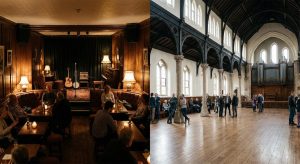
The Main Cabaret Suite held 1,170 people. Not 2,000. Not 3,000. A thousand people and change, seated at cabaret-style tables, glasses in front of them, close enough to the oche that you could hear the darts hit the board.
That last part is not a metaphor. At the BDO World Championship, in the right part of the room, you could genuinely hear the thud of tungsten on sisal. There was no glass screen between the players and the crowd. No protective barrier. The noise came directly from the stage to the seats, and the noise from the seats went directly back.
The layout was cabaret, not theatre. Circular tables, chairs around them, so you were facing roughly inward rather than all pointing in the same direction. It created pockets of noise: groups of people who’d come together, who were having a night out, who happened to be watching world-class darts at the same time. It felt like a pub that had somehow expanded to hold a thousand people without losing the intimacy of a pub.
Players walked to the oche through the crowd, not from a backstage entrance down a tunnel. In the early years especially, the separation between performer and audience was minimal. Eric Bristow or John Lowe could walk past your table on the way to the stage. You’d be near enough to notice whether they looked nervous. Some of them were.
The smell of the place was specific too. Spilt lager on carpet, the faint trace of cigarette smoke that never quite left the upholstery even after the smoking ban, hot lights on a low ceiling. Not glamorous. Real. It smelled like a night out was supposed to smell, not like a sports venue trying to be a night out.
What you got at Lakeside was noise in the way that noise actually happens among people who are drinking and enjoying themselves, irregular, human, occasionally chaotic. The crowd sang. They chanted. When someone hit a nine-darter or a crucial double, the reaction was immediate and physical in the way that stadium reactions never quite are. It came from people who were close to the action. It was real.
The Final Years and the Move to the O2
The BDO’s last World Championship at Frimley Green was in January 2019. The 2020 edition moved to the Indigo at The O2 in London, the smaller venue inside the arena complex, and it turned out to be the final tournament before insolvency ended the whole enterprise.
The WDF, the BDO’s successor body, brought the World Championship back to Lakeside from 2022, but by then the context had changed so fundamentally that the continuity was more symbolic than real. The crowds were smaller. The players were different. The stakes felt lower.
The Indigo sits inside an arena complex built for 20,000 people. It is a corporate event space with the atmosphere of a corporate event space. The PDC World Championship at Alexandra Palace works because Ally Pally has its own history and character, and because the PDC built something genuinely new there rather than trying to recreate something old. The BDO at the O2 did neither. It was a smaller organisation in a larger room, and the size mismatch was visible from every seat.
Lakeside at 1,170 people was full. Full meant something. A thousand people at near-capacity, with tables and drinks and proximity to the players, generates a kind of heat, acoustic, social, emotional, that a bigger crowd in a bigger room simply doesn’t. The O2 wasn’t the problem. The problem was thinking that you could take what Lakeside had built over thirty-four years and relocate it to a bigger postcode.
You couldn’t. Nobody ever managed it. What Frimley Green had was specific to Frimley Green: to that room, that layout, that history, those tables, that car park, that queue in the cold in January. Some things don’t scale. The atmosphere at the Lakeside Country Club was one of them.