How the BBC Found Darts
ITV got there first. The News of the World Individual Darts Championship was on the telly in 1972, which tells you something about what ITV thought was peak-time entertainment back then, and they weren’t wrong. The World Masters followed in 1974. Darts on television wasn’t the BBC’s idea. It was ITV’s punt on a pub sport, and it landed.
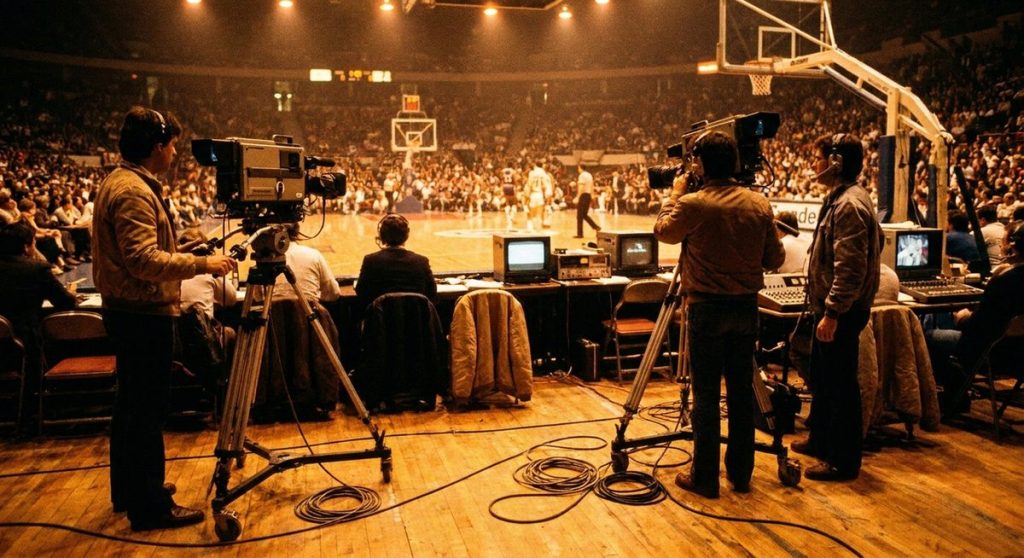
The BBC came to it differently. When the inaugural World Professional Darts Championship was staged in 1978, the BBC picked it up for a reason that had nothing to do with cultural vision. Winter is a difficult season for sport broadcasters. Football is weather-dependent, cricket is in Australia, and the schedules need filling. Darts was cheap. Darts was available. You could set up cameras at the Heart of the Midlands in Nottingham, where that first championship was held, and let it run.
What they didn’t expect was what happened next. The players the BBC pointed cameras at turned out to be characters. Eric Bristow. John Lowe. Jocky Wilson. Leighton Rees, who won that first title. These weren’t grey men in blazers. They were from Stoke-on-Trent and Kirkcaldy and Merthyr Tydfil, they drank during matches, they sledged each other, and they played darts at a standard that, if you actually watched, was remarkable. The BBC had stumbled into something.
The Peak Years
By the early 1980s, darts in British culture had arrived. Not fringe. Not novelty. Prime time. By 1983, there were 23 televised darts events across BBC and ITV. Twenty-three. The sport had gone from a pub pastime to a television industry inside a decade.
The numbers back it up. The 1983 BDO World Championship final, Keith Deller against Eric Bristow, pulled more than eight million viewers on a Saturday afternoon. That’s not a sports figure. That’s a national event figure. Deller was 23, a rank outsider, and he beat Bristow, who was at the absolute peak of his powers, to win his first world title. The BBC didn’t manufacture that drama. It just pointed cameras at it. But the cameras mattered. Without the BBC, Deller winning that final is a footnote. With it, it’s one of the great sporting upsets of the decade.
The players the BBC made stars of in this period were genuinely famous. Bristow on Bullseye. Jocky Wilson recognisable to people who’d never watched a full leg of darts in their lives. The Embassy sponsorship gave the World Championship a name that stuck, and the BBC gave it reach. Saturday and Sunday afternoons at Lakeside, once the tournament moved to Frimley Green in 1986. Carpet, low lighting, a crowd that knew every player. The BBC framed all of it and sent it into living rooms across the country.
Why the BBC Dropped It
The decline set in before most people noticed. By the late 1980s, the 23-event peak was already a memory. Tournaments were disappearing from schedules. Sponsorship was pulling back. The image of darts, beer guts, cigarettes, working men’s clubs, had started to feel like a liability to broadcasters chasing a different kind of advertiser.
The BBC cut its broader darts coverage progressively through the late 1980s. After 1988, they withdrew from tournaments outside the Embassy World Championship. By 1989, the World Championship was the only remaining darts event on the BBC. The official reasoning was always vague: scheduling, resources, shifting priorities. The honest answer is that darts had become associated with a demographic that broadcasters were starting to regard as unfashionable. Pub culture. Working class. Northern and Scottish in its stars, even if the world final was now in Surrey.
In 1992, the players who would form the breakaway World Darts Council, later the PDC, made the same diagnosis. One televised event per year wasn’t a media presence; it was a life support machine. The BDO–PDC split of 1993 happened for a lot of reasons, but the BBC’s retreat from darts was central to it. If the BBC had wanted darts, the split might not have happened the way it did.
Sky Sports and the PDC
Sky signed with the World Darts Council in 1993, a year after it was founded, broadcasting three WDC tournaments that year. The first PDC World Darts Championship followed from 28 December 1993 to 2 January 1994. The PDC understood from the start that darts belongs in the gap between Christmas and New Year, when people are at home and ready for sport that doesn’t take itself too seriously.
What Sky did was different from what the BBC had done, and not entirely better. Sky brought walk-on music, countdown clocks, crowd participation that felt more like a concert than a match. Alexandra Palace replaced Lakeside as the prestige venue. Louder, more manufactured, more obviously produced for television. The PDC and Sky built something genuinely popular; by the mid-2000s, Phil Taylor on Sky was drawing audiences the BBC’s BDO coverage could no longer match. But it was a different sport from the one the BBC had covered, aimed at a different crowd. Whether that was progress depends on what you think darts is for.
The BDO on BBC: The Long Decline
The BBC kept the BDO World Darts Championship on screen through all of this. Year after year. The Embassy became the Lakeside Championship, the sponsors changed, and the players were, let’s be honest, increasingly not the best players in the world, because the best had gone to the PDC. The BBC kept showing it anyway.
With declining enthusiasm and declining airtime. What had been a genuine scheduling event in the 1980s became something the BBC fitted around other things. Coverage windows shrank. The sense that this was a priority had long gone.
BT Sport came into the picture for 2015 and 2016, sharing coverage on the evening sessions. That arrangement was itself a statement. A tournament held for 38 years, now split with a subscription broadcaster because neither party was fully committed.
In February 2016, the BBC announced it would drop the BDO World Championship entirely after that year’s final, signing instead to show the PDC’s new Champions League of Darts. After 38 years, 1978 to 2016, that was it. Channel 4 took the free-to-air rights for 2017 and 2018. It wasn’t the same. It was never going to be the same.
The BDO went into liquidation in 2020. Losing the BBC in 2016 wasn’t the only reason, the BDO had been mismanaged for years, but it meant losing the only real broadcast platform they had left. Once that went, the trajectory was clear.
What the BBC made in the 1980s was a sport with a national profile. What it took away, across 30 years of slow retreat, was exactly that. The BDO version, part of Saturday afternoon in a way that felt genuinely working-class and genuinely British, is gone. The BBC found darts when it needed cheap television. It left when it decided darts wasn’t the right kind of television any more. The sport paid the price.